HOA Fees in New Construction Communities: What You Are Really Paying For
Nearly every new community in the Portland metro comes with a homeowners association. Buyers usually ask what the dues are, hear a modest monthly number, and move on. The number is not the interesting part. What the association owns, who currently controls it, and how much is in reserve are the interesting parts.
Why the HOA exists in the first place
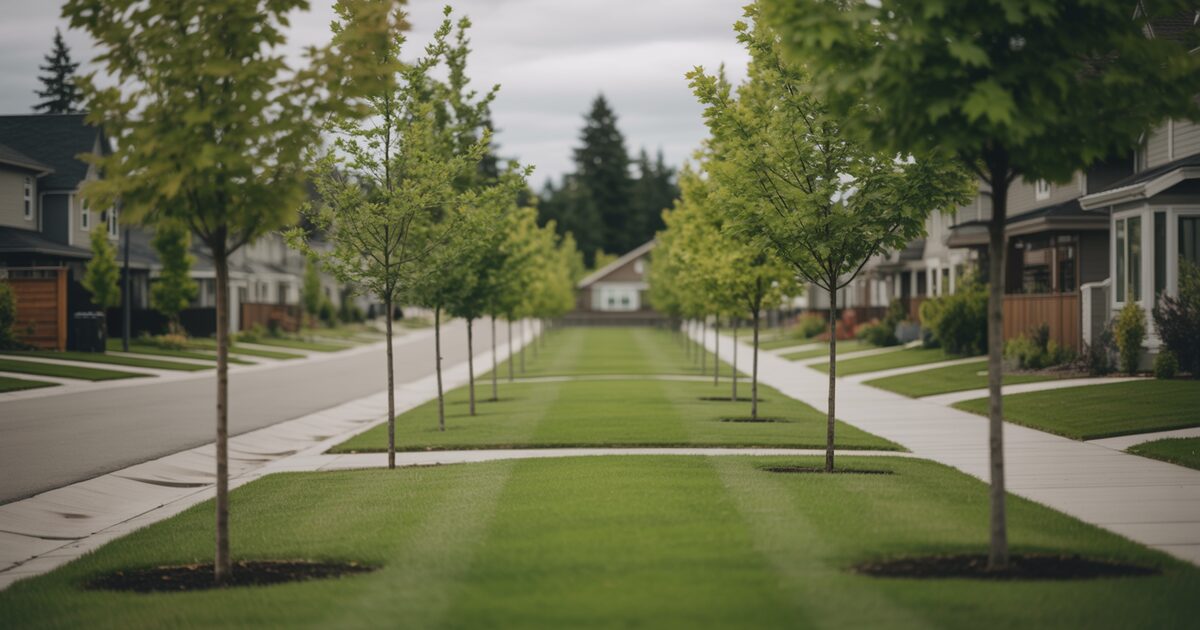
When a builder develops a subdivision, somebody has to own and maintain the things that are not on anyone’s lot. Stormwater facilities, the landscaped entry, private streets and alleys, sidewalks along common areas, open space tracts, a pocket park, sometimes a trail or a play structure.
Local government usually will not take those on. So the developer forms an association, records the governing documents against every lot, and the ownership transfers to the homeowners collectively. Your dues are the operating budget for a small utility you now co-own.
In Oregon the two relevant frameworks are the Planned Community Act and the Condominium Act, which set out what associations can do, what they owe you as an owner, and what has to be disclosed before you buy.
What the dues typically cover
- Landscaping and irrigation on common tracts and the entry.
- Stormwater facilities, which in our climate are not a small line item.
- Private street maintenance, where streets were not dedicated to the city.
- Common area lighting and its power bill.
- The association’s liability and property insurance.
- Management company fees, in most communities of any size.
- Reserve contributions, which is the line most buyers skip and the one that predicts your future.
Note what is generally not covered in a single-family subdivision: your roof, your siding, your yard, your insurance. Detached-home HOA dues buy shared infrastructure, not building maintenance. That is a condominium arrangement and a different product entirely.
The first budget is a projection, not a track record
Here is the part I want new-construction buyers to sit with. In a brand new community, the developer writes the initial budget before anyone has lived there. Nothing has broken, nothing has needed replacing, and the landscaping is young.
So the first year’s dues are frequently the lowest they will ever be. That is not a trick, it is arithmetic. Once trees mature, irrigation systems age, the stormwater facility needs real maintenance and the association takes on its first insurance renewal at market rates, the budget meets reality.
Assume dues will rise. Ask by how much they have risen in the builder’s other completed communities in the area, which is a fair question and one a good sales team can answer.
Builder control, and the day it ends
While a community is being built, the developer controls the association board. That is normal and necessary. At a defined point, control transitions to the homeowners.
Transition is where problems surface. The new homeowner board inherits whatever reserve balance exists, whatever maintenance was deferred, and whatever the actual operating costs turn out to be. If the developer-era budget was thin, the correction lands on the homeowners as a dues increase, a special assessment, or both.
Ask two questions before you buy: when is transition expected, and what does the reserve study say. A reserve study projects the cost and timing of replacing the shared assets and tells you whether current contributions are on pace. An association with real reserves is boring in the best way. One without them is a special assessment waiting for a date.
The documents you are entitled to
Before closing you should receive the governing documents and a disclosure or resale statement covering the association’s finances and rules. Oregon law gives buyers a defined window to review this material and, in the right circumstances, to cancel based on it. That window is not decorative. It exists because these documents change what owning the home is like.
Read at minimum:
- The CC&Rs. What you may and may not do with your own property.
- The current budget, line by line, including the reserve contribution.
- The reserve study, if one exists.
- Recent meeting minutes. The fastest way to find out what the community is actually arguing about.
- Any pending or threatened litigation. Construction defect claims against a developer show up here first.
Rules that catch people out
The restriction people most often discover after moving in is parking. Many new communities have narrow streets with limited on-street parking, and rules about overnight parking, RVs, boats and work vehicles. If you own a trailer or a third vehicle, read that section before you write an offer, not after.
Also common: architectural review requirements for exterior changes, fence height and material specifications, rules about what can be stored in view, landscaping standards for your own front yard, and limits on short-term or long-term rentals. That last one matters if you have any thought of eventually renting the place out, which I get asked about often enough that I wrote a separate post on investment property in the metro.
How to think about the money
Dues are part of your housing payment. A lender counts them in your debt-to-income ratio, so they directly reduce how much house you qualify for. If you are close to the edge of your budget, a community with higher dues costs you purchasing power before you have spent a dollar.
The fair comparison is not “HOA versus no HOA.” It is what the dues buy against what you would otherwise pay yourself. Private street maintenance is a genuine expense that has to happen somewhere. So is the stormwater facility. In a community without an association, those costs either fall on individual owners or the shared spaces slowly degrade.
What you should refuse to accept is dues that fund very little, an association with no reserves, and a rulebook you cannot live under.
Every LGI community I sell in has an association, and I can tell you what the dues cover in each one before you get emotionally attached to a floor plan. Ask me, or start with the communities page to see where they are.
Have Questions?
I’m always happy to chat about real estate in Oregon. No pressure, no commitment.