VA Loans
Why Veterans Are Moving to Portland (And the VA Loan Advantages They Should Know About)
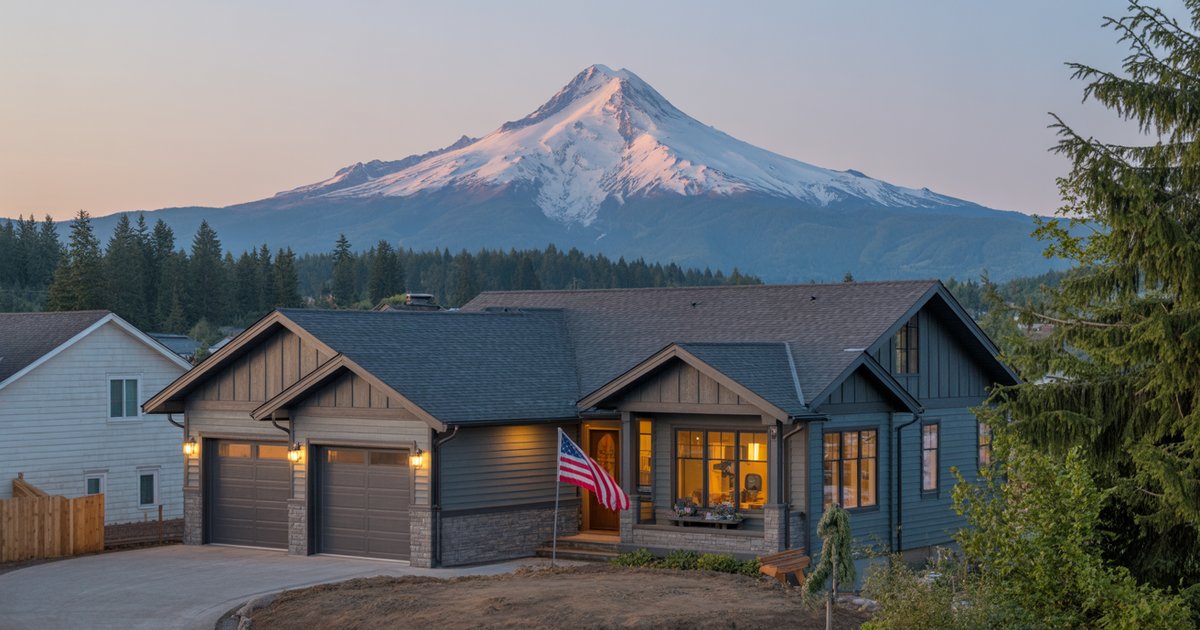
When I left the Army after my time as a UH-60 Black Hawk crew chief, I had a list of what mattered to me in a place to live: outdoor access, a reasonable cost of living compared to the coasts, a strong veteran community, and a state that actually valued my service. Oregon checked every box. It’s been over a decade, and I haven’t looked back.
I’m not the only one. The Portland metro has seen a steady stream of veterans relocating from bases across the country — Joint Base Lewis-McChord up in Washington, bases in California and the Southwest, and retirees from all branches looking for their next chapter. Here’s why Portland keeps landing on the list, and the financial advantages that make the move work.
Why Portland Works for Veterans
Outdoor Access That Actually Delivers
Most of us didn’t join the military because we love sitting in cubicles. Portland puts you within an hour of Mount Hood skiing, Columbia River Gorge hiking, Pacific Coast beaches, and some of the best fly fishing in the country on the Deschutes and Sandy rivers. Forest Park — right inside the city — has 80+ miles of trails. You can mountain bike after work on a Wednesday and be on a summit by Saturday morning.
For veterans dealing with the transition to civilian life, that kind of access isn’t a luxury — it’s therapy. Organizations like Team Red White & Blue and the Sierra Club Military Outdoors program run active chapters in Portland.
Strong VA Healthcare Infrastructure
The Portland VA Medical Center on SW 3rd Avenue handles everything from primary care to specialty services. The campus is well-staffed compared to many VA facilities around the country, and wait times for appointments are shorter than the national average. There’s also the Vancouver VA campus across the river in Washington, which gives veterans in Clark County convenient access without crossing back into Oregon.
Community-Based Outpatient Clinics (CBOCs) in Hillsboro, Salem, and Bend extend coverage across the region. If you’re enrolled in VA healthcare, the Portland metro is one of the better places in the country to use it.
A Veteran Community That Shows Up
Portland’s veteran community is more active than most people realize. The Oregon Department of Veterans’ Affairs (ODVA) runs one of the more responsive state-level vet agencies in the country. Local organizations like Volunteers of America Oregon, Portland Vet Center, and Oregon Paralyzed Veterans of America provide everything from career transition help to peer support.
Employers here are veteran-friendly. Intel, Nike, Columbia Sportswear, and the healthcare systems (Providence, OHSU, Legacy) all run active veteran hiring programs. Oregon also offers a veteran preference in state hiring — 5% preference for veterans, 10% for disabled veterans.
Cost of Living: Honest Assessment
Portland isn’t cheap, but it’s not San Diego or the D.C. metro either. You can buy a new-construction home in the metro for under $400,000 in communities like Woodburn. Solid family neighborhoods in Gresham, Oregon City, and Battle Ground (WA) run in the $450,000–$550,000 range. And if you settle in Clark County, Washington, you skip state income tax entirely — a meaningful savings if you’re earning $60,000 or more.
Compared to where a lot of veterans are coming from — the San Diego area around Camp Pendleton, the Hampton Roads corridor near Norfolk, or the D.C. suburbs near Quantico and Fort Belvoir — Portland metro housing costs are 20–40% lower.
The VA Loan: Your Most Powerful Tool for Getting Here
If you’re a veteran thinking about buying in the Portland area, your VA loan benefit is the single biggest financial advantage you have. I’ve used it myself, and I’ve helped dozens of fellow vets use theirs. Here’s the breakdown for the Portland market specifically.
Zero Down Payment — Real Numbers
The VA loan requires no money down on homes up to the conforming loan limit, which is $766,550 in all Oregon and Washington counties as of 2026. That covers the vast majority of homes in the Portland metro.
Let’s put that in perspective. A conventional buyer purchasing a $475,000 home needs to bring $23,750 for a 5% down payment — or $95,000 for 20% down to avoid PMI. A VA buyer brings zero. That’s money that stays in your savings, your emergency fund, or your kids’ college account.
No PMI — What That Actually Saves You
Private mortgage insurance on a conventional loan with less than 20% down typically runs 0.5%–1% of the loan amount annually. On a $475,000 loan, that’s $200–$400 per month. Over five years, you’re paying $12,000–$24,000 for insurance that protects the lender, not you.
VA loans never charge PMI. That’s $200–$400 per month that goes toward your mortgage principal, your savings, or your life instead of a lender’s risk cushion.
Lower Interest Rates
VA loan rates in spring 2026 are running 0.3%–0.5% below conventional rates. That puts most VA borrowers in the high 5s to low 6s versus mid-to-high 6s for conventional buyers. On a $475,000 loan over 30 years, that half-percent difference saves you roughly $55,000 in total interest.
The Funding Fee — And Who Doesn’t Pay It
The VA funding fee for first-time use with zero down is 2.15% of the loan amount. On a $475,000 home, that’s about $10,200. It can be rolled into the loan so you don’t pay it out of pocket.
But here’s what a lot of veterans miss: if you have any VA disability rating — even 10% — the funding fee is completely waived. That’s an instant $10,000+ savings. If you suspect you have a service-connected condition you haven’t filed for, get your claim in before you buy. It’s worth the effort.
Oregon and Washington Benefits Beyond the VA Loan
Oregon Property Tax Exemption for Disabled Veterans
Oregon offers one of the better property tax exemptions for disabled veterans in the country. If you have a service-connected disability, you may qualify for an exemption that reduces your assessed home value by $25,243–$30,478 (2026 figures, adjusted annually for inflation). That translates to roughly $300–$500 per year in property tax savings depending on your county’s tax rate.
For veterans rated 100% disabled or receiving total disability based on individual unemployability (TDIU), the exemption is larger. The application goes through your county assessor’s office, and the ODVA can help you with the paperwork.
Washington State Property Tax Exemptions
If you buy in Clark County (Vancouver, Battle Ground, Ridgefield), Washington offers its own property tax relief for disabled veterans. Veterans with a 100% service-connected disability rating may qualify for a complete property tax exemption on their primary residence. The income thresholds are generous, and the savings can be substantial — $4,000–$7,000 per year in Clark County.
No Income Tax in Washington
Veterans receiving VA disability compensation already get that tax-free at the federal level. But if you’re working and earning W-2 income, living in Washington means you skip the Oregon income tax entirely — a top marginal rate of 9.9%. For a veteran household earning $80,000, that’s roughly $4,500–$6,000 per year in savings. Over a decade, that’s a new truck.
ODVA Home Loans
The Oregon Department of Veterans’ Affairs offers its own home loan program separate from the federal VA loan. ODVA home loans can sometimes offer competitive rates and can be used alongside other benefits. If you’re buying in Oregon, it’s worth checking whether the ODVA loan beats your VA lender’s current rate.
VA Loan + New Construction: The Best Play
I sell new construction at LGI Homes, so I’m biased — but I’m biased because I’ve seen the numbers for seven years and they consistently favor this combination.
When a veteran uses a VA loan on a new-construction home, here’s what typically happens:
- Zero down payment from the VA loan
- Builder-paid closing cost credits that cover most or all of your remaining costs
- No PMI — ever
- Full builder warranty on a home where nothing needs fixing
- Modern energy efficiency that keeps monthly utility bills $100–$200 lower than a comparable older home
I’ve had veterans move into brand-new homes with under $2,000 out of pocket total. That’s not a typo. When you stack VA loan benefits with builder incentives, the barrier to homeownership drops to almost nothing.
Current LGI Homes communities accepting VA buyers:
- Dove Landing (Woodburn, OR) — from $389,900
- Sunset Village (Gresham, OR) — from $469,900
- Copper Heights (Clackamas, OR) — from $699,900
- Park Meadow (Vancouver, WA) — from $499,900
- Walnut Grove (Vancouver, WA) — from $539,900
- Beverly (Battle Ground, WA) — from $443,900
Making the Move: Practical Steps
If you’re a veteran thinking about relocating to Portland, here’s the order of operations I recommend:
- Step 1: Get your Certificate of Eligibility (COE). Your lender can pull it electronically in minutes. If you’re not sure about your eligibility, contact me and I’ll connect you with a VA-savvy lender.
- Step 2: File any pending VA disability claims before you buy. A disability rating — even 10% — waives the funding fee and unlocks property tax benefits.
- Step 3: Get pre-approved (not just pre-qualified) with a lender who does high-volume VA lending. The difference in competence between a lender who closes 50 VA loans a year and one who closes 3 is enormous.
- Step 4: Decide Oregon vs. Washington. Both have advantages. Oregon has no sales tax. Washington has no income tax. Your situation determines which saves you more.
- Step 5: Connect with an agent who knows the VA process inside and out. That’s where I come in.
From One Veteran to Another
I went through this exact process. I left the Army, figured out where I wanted to live, used my VA benefit, and built a life in the Pacific Northwest. Now I spend my days helping other veterans do the same thing.
I don’t just understand VA loans from a continuing-education course. I’ve sat across the closing table from the lender and signed the paperwork myself. I know what BAH looks like on an LES, how to explain deployment-gap income to an underwriter, and why your DD-214 matters more than your credit score in some conversations.
If you’re thinking about making the move — or if you’re already here and haven’t used your VA benefit yet — I’d welcome the conversation. No sales pitch. Just a straight talk between veterans about your options.
Call or text (904) 392-3984 or email heath.watte@lgihomes.com. You can also reach out through our contact form or learn more about my veteran services.
Have Questions?
I’m always happy to chat about real estate in Oregon. No pressure, no commitment.